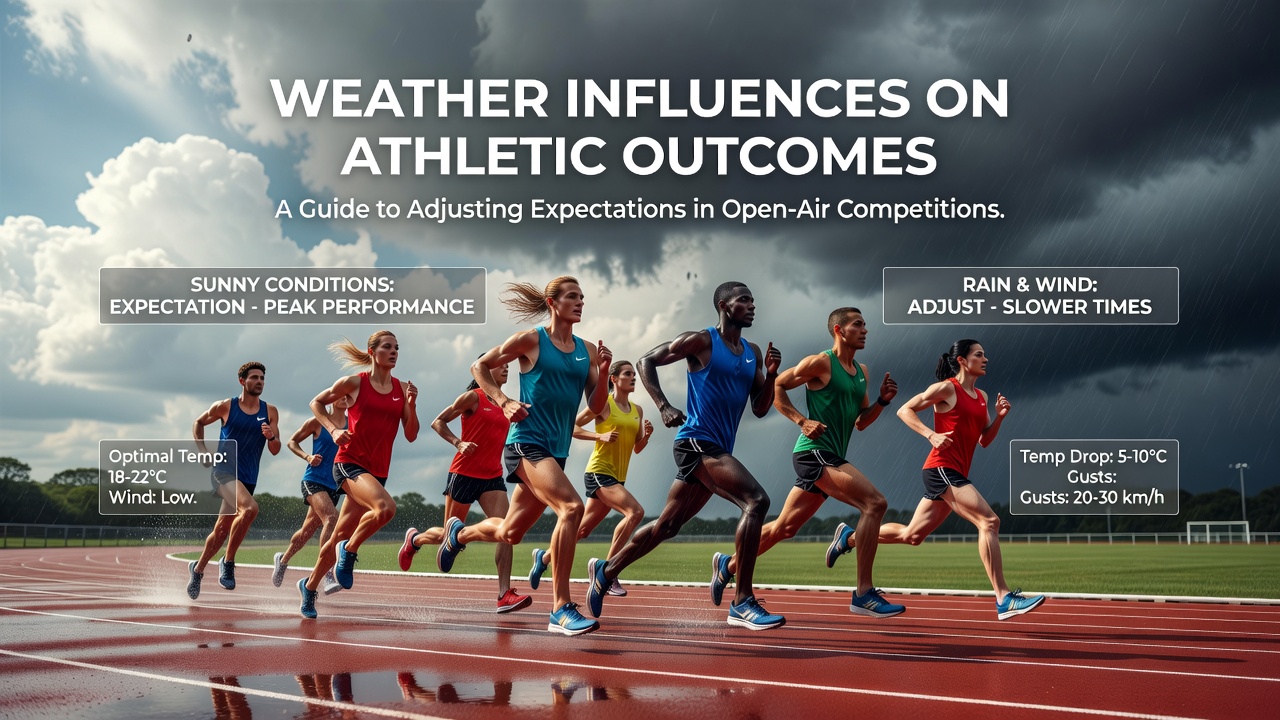
Weather Influences on Athletic Outcomes: A Guide to Adjusting Expectations in Open-Air Competitions
Weather conditions shape athletic performance in open-air competitions through direct impacts on physiology, equipment behavior, and surface characteristics, and researchers continue to document these patterns across multiple sports. Temperature, wind, precipitation, and humidity each alter outcomes in measurable ways that athletes, coaches, and event organizers account for when preparing strategies and setting performance benchmarks.
Temperature Variations and Performance Metrics
High temperatures accelerate core body heat buildup during prolonged exertion, which forces athletes to reduce pace to maintain safe internal conditions. Studies from the American College of Sports Medicine show that marathon runners experience average speed reductions of 3 to 5 percent when ambient temperatures exceed 25 degrees Celsius compared with cooler race days around 10 to 15 degrees. In contrast, lower temperatures preserve muscle efficiency in shorter events but increase injury risk when cold stiffens tissues before warm-up completion.
July 2026 schedules place several major outdoor tournaments in regions experiencing peak summer heat, including tennis events on European hard courts and cycling stages through southern France. Organizers respond by advancing start times or providing additional hydration stations, adjustments that data from previous cycles indicate help stabilize completion rates. Those monitoring elite track and field events note that discus and javelin throws gain distance in warmer air because reduced air density lowers drag on implements, a factor quantified in biomechanics research from the Australian Institute of Sport.
Wind Patterns and Their Influence on Ball and Body Dynamics
Wind alters trajectories in racket sports, golf, and field events while also affecting runners through changes in effective resistance. Tailwinds up to the legal limit of 2 meters per second can improve 100-meter sprint times by 0.1 seconds or more according to International Association of Athletics Federations records, whereas headwinds increase energy cost proportionally. Crosswinds create additional challenges for cyclists and rowers by introducing lateral forces that demand constant corrective input from competitors.
Precipitation compounds these effects when rain adds weight to clothing and equipment or turns grass and clay surfaces slick. Football matches played on wet pitches show higher frequencies of short passes and fewer long balls in match data compiled by UEFA technical observers, reflecting players' adjustments to reduced friction. Tennis players on grass courts experience faster ball skid and lower bounce during light rain, prompting changes in serve placement and rally length that statistical reviews of Grand Slam matches confirm.
Humidity, Air Density, and Combined Conditions
Humidity reduces the body's ability to cool through sweat evaporation, extending recovery intervals between high-intensity bursts. Research published in the Journal of Applied Physiology demonstrates that athletes in environments above 70 percent relative humidity record elevated heart rates at the same workload compared with drier conditions at identical temperatures. Air density also shifts with combined heat and humidity, which affects projectile sports by changing lift and drag coefficients on balls and discs.
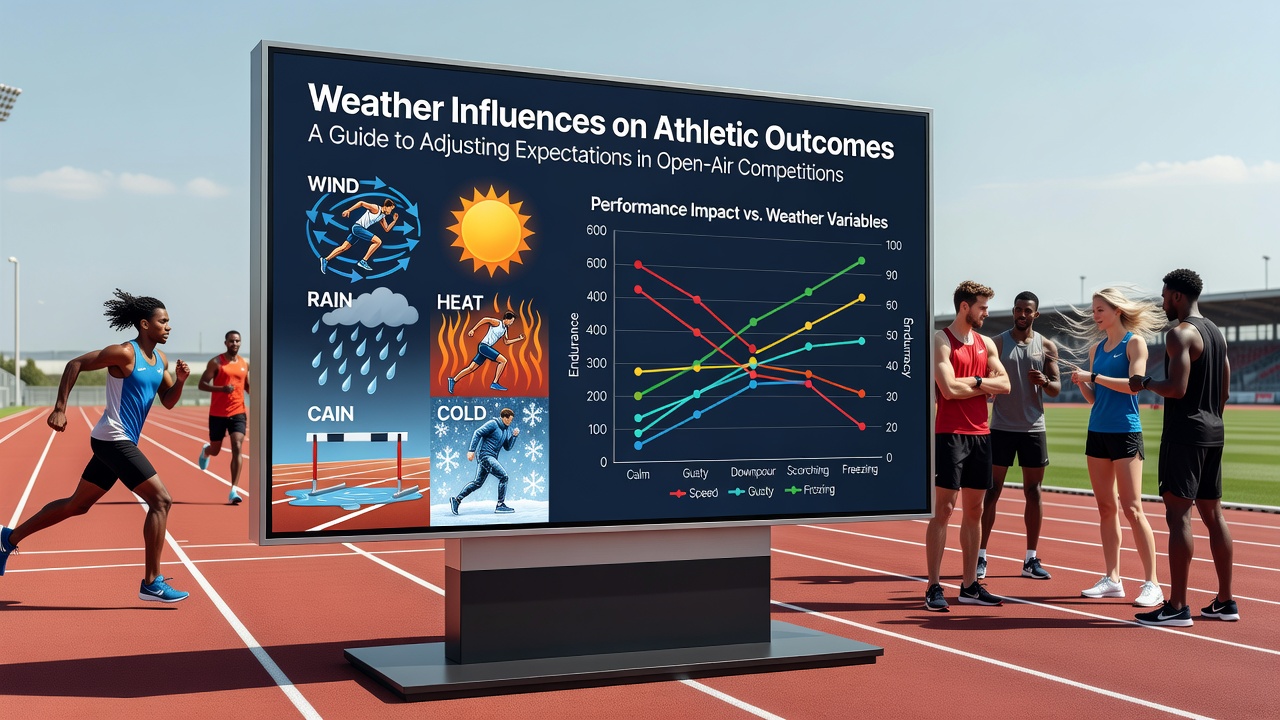
Event planners consult meteorological forecasts to anticipate these interactions. Data from the European Centre for Medium-Range Weather Forecasts indicate that accurate seven-day predictions allow scheduling changes that minimize exposure to peak humidity periods in July across northern hemisphere venues. Golf tournaments, for instance, record lower average scores on days when morning dew evaporates early because firmer greens reward precise approach shots over those played on softer surfaces.
Adjusting Expectations Through Data Integration
Coaches integrate historical weather-performance correlations into preparation models. One analysis of ATP tour matches found that players with prior experience in similar humidity levels maintained higher first-serve percentages than those encountering the conditions for the first time. Similar patterns appear in open-water swimming, where water temperature directly influences stroke rate and overall race pacing according to reports from World Aquatics governing body.
Teams also modify equipment choices based on forecasts. Cyclists select tire pressures and aerodynamic setups that account for expected wind angles, while football clubs adjust warm-up durations to match surface moisture levels. These adaptations rest on datasets that accumulate across seasons rather than single events, allowing gradual refinement of tactical responses.
Conclusion
Weather remains a measurable variable in open-air athletic outcomes because temperature, wind, precipitation, and humidity each modify physiological demands, equipment behavior, and competitive dynamics. Organizations and athletes incorporate meteorological data and historical performance records to calibrate expectations and implement targeted adjustments. Continued collection of environmental and result metrics supports ongoing refinement of these preparation frameworks across summer 2026 competitions and beyond.