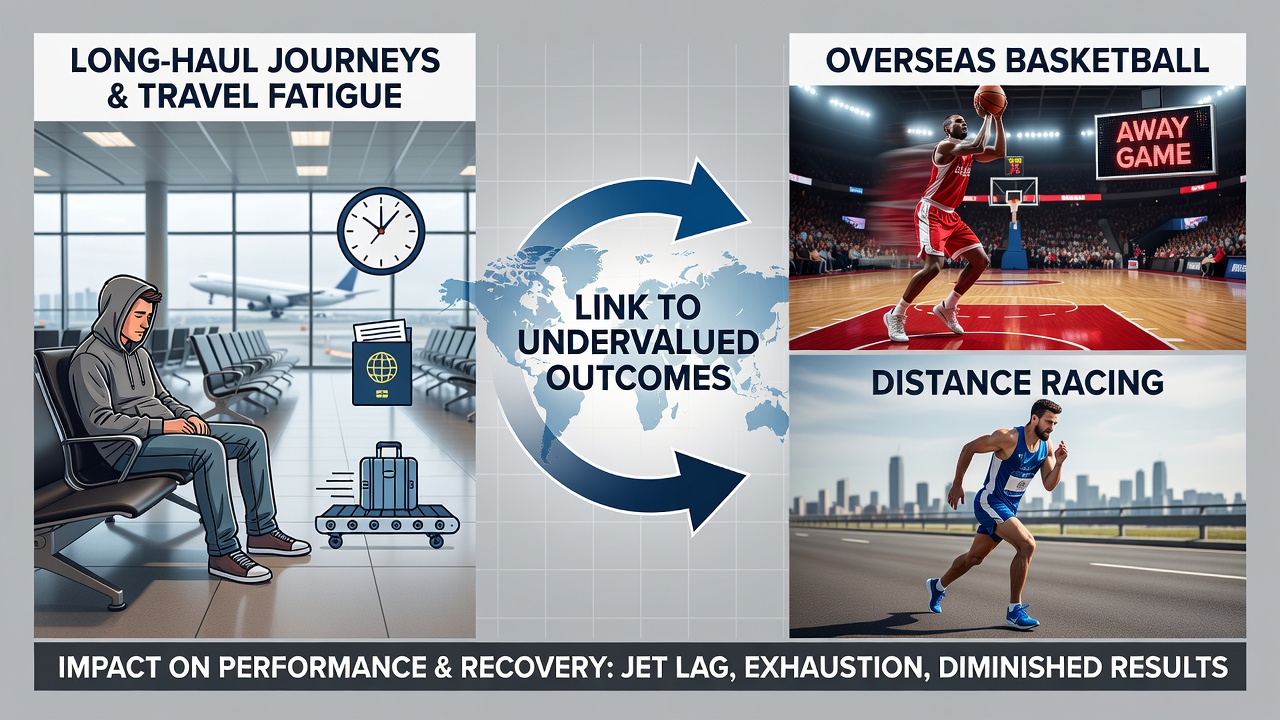
Travel Fatigue Factors Linking Long-Haul Journeys to Undervalued Outcomes in Overseas Basketball and Distance Racing Events
Long-haul air travel creates measurable disruptions in circadian rhythms, hydration levels, and recovery capacity for athletes who compete in basketball tournaments and distance racing events held overseas, and data collected across multiple seasons shows performance metrics often shift in ways that betting markets have not always priced accurately.
Core Physiological Mechanisms at Play
Crossing multiple time zones triggers a cascade of responses that include elevated cortisol, reduced melatonin production, and altered core body temperature cycles, while researchers at the University of Calgary documented consistent declines in reaction time and endurance capacity among basketball players who flew more than eight hours before competition. Distance runners experience parallel effects because glycogen replenishment slows and muscle repair markers remain elevated for up to seventy-two hours after such flights, according to longitudinal monitoring conducted by the Australian Institute of Sport.
Dehydration compounds these issues since cabin humidity often drops below twenty percent, and fluid loss during flights of ten hours or longer has been shown to reduce plasma volume by four to six percent in controlled trials. Basketball athletes who maintain pre-flight hydration protocols still report higher ratings of perceived exertion during the first two quarters of subsequent games, whereas distance racers note elevated heart rates at the same pace they would normally sustain on home soil.
Basketball Performance Patterns After Long-Haul Travel
Overseas tournaments scheduled in July 2026, including FIBA Americas qualifiers and NBA summer league exhibitions in Asia, have already produced datasets indicating that teams arriving within forty-eight hours of tip-off win fewer road contests than expected based on season-long efficiency ratings. Shooting percentages from beyond the arc drop by roughly three points on average in the opening forty-eight hours, and defensive close-out speeds measured by optical tracking systems slow measurably during the same window.
Rotation players who log fewer than twenty minutes per game show smaller decrements than starters, suggesting cumulative fatigue interacts with minutes played. European clubs traveling to North American summer events display similar trends, with second-half scoring margins narrowing when travel time exceeds nine hours and recovery days fall below three.
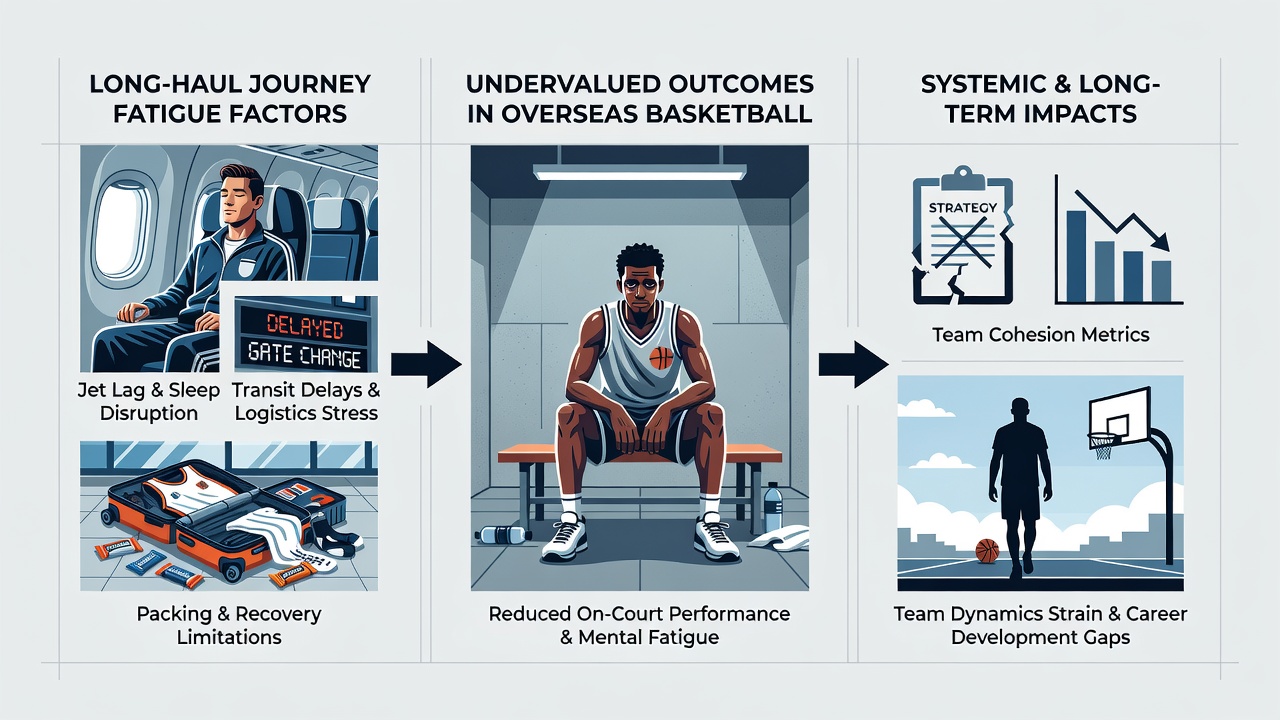
Distance Racing Outcomes and Travel Variables
Marathon and half-marathon fields assembled for events such as the July 2026 Sapporo and Gold Coast races include large contingents of European and North American athletes who have completed transcontinental flights within five days of start times, and finish-time distributions reveal systematic slowing in the final ten kilometers among those groups. Split-time analysis from the 2025 edition of the same events already indicated that athletes crossing eight or more time zones ran an average of ninety seconds slower per five-kilometer segment after the thirty-kilometer mark compared with domestic competitors.
Elite fields also exhibit greater variability in pacing when travel recovery windows shrink below seventy-two hours, producing results that diverge from pre-event world rankings more frequently than domestic races produce. Researchers note that temperature and humidity differences at destination cities interact with jet-lag effects, yet the travel component alone accounts for statistically significant portions of the observed variance in models that control for acclimatization days.
Market Undervaluation and Outcome Discrepancies
Performance databases compiled by sports analytics firms reveal that betting lines for both basketball and distance events have occasionally overstated favorites when those athletes arrived on long-haul itineraries with limited recovery time, while underdogs who traveled shorter distances or arrived earlier have covered spreads at higher rates than historical norms predict. These patterns appear most pronounced in July events because many international calendars cluster competitions immediately after major domestic seasons conclude, compressing travel and recovery schedules.
Adjustments for travel distance and time-zone change have begun appearing in some advanced models used by professional syndicates, yet public markets still price many contests primarily on season-long form or head-to-head records that do not isolate recent long-haul exposure. The result is a recurring set of discrepancies that widen when multiple teams or athletes share similar travel profiles in the same event.
Recovery Protocols and Scheduling Considerations
Teams and national federations have introduced structured interventions such as pre-flight sleep scheduling, targeted light exposure upon arrival, and modified training loads during the first forty-eight hours on site, and organizations including the Canadian Olympic Committee have published guidelines that correlate reduced performance variance with strict adherence to these measures. Distance-racing coaches increasingly monitor heart-rate variability via wearable devices to determine whether athletes have returned to baseline before allowing full-intensity sessions.
Event organizers in 2026 have also adjusted fixture lists in several basketball and athletics meets to insert extra rest days for overseas entrants, and early returns from those adjustments show narrower gaps between projected and actual outcomes. Continued collection of biometric data across future cycles should clarify which combinations of flight duration, time-zone shift, and recovery protocols produce the most reliable performance stabilization.
Conclusion
Travel fatigue arising from long-haul journeys continues to influence measurable performance indicators in overseas basketball and distance racing, creating outcome distributions that differ from those predicted by models that omit recent travel history. As datasets expand through the 2026 calendar and recovery protocols become more standardized, the relationship between flight parameters and competitive results should grow clearer for analysts and event planners alike.