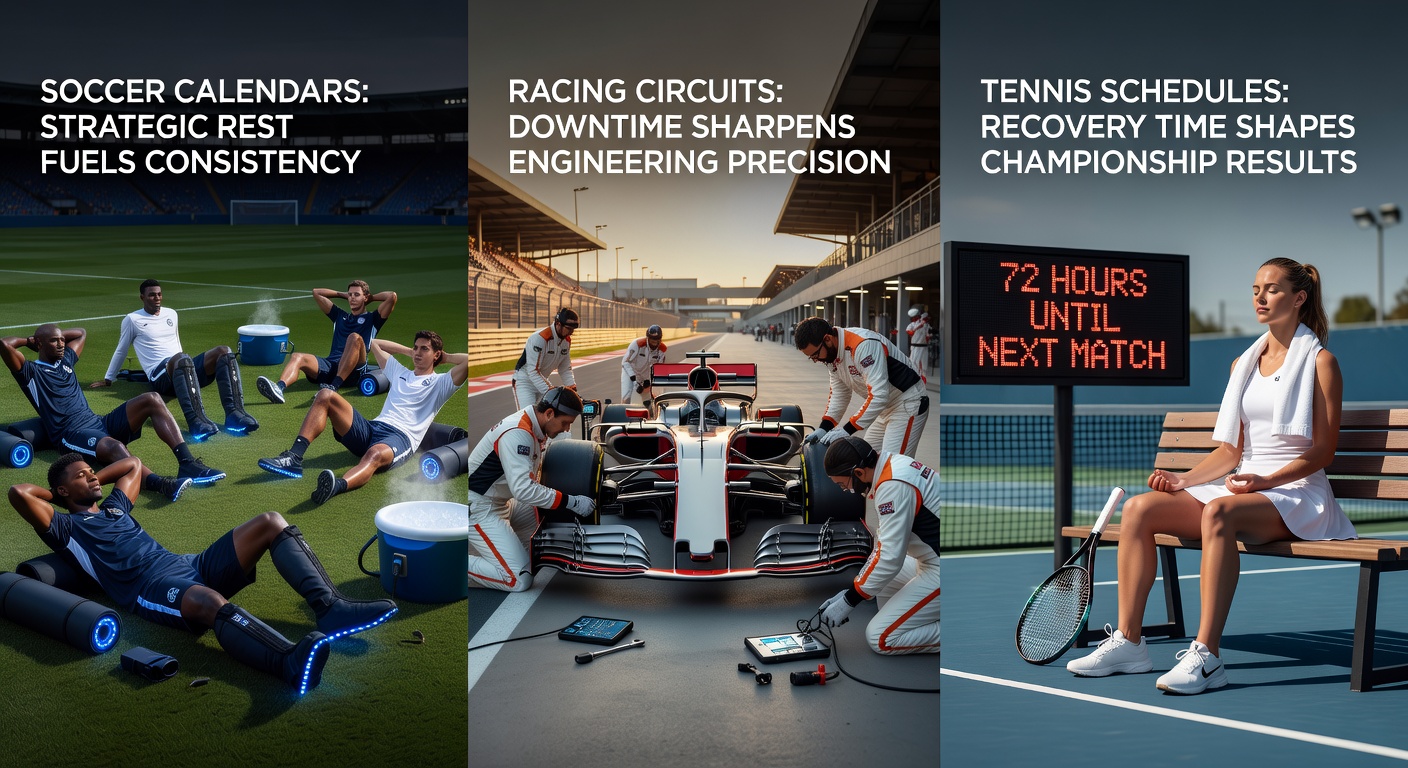
The Subtle Power of Recovery Time in Shaping Results for Busy Soccer Calendars, Racing Circuits, and Tennis Schedules
Busy calendars across soccer, horse racing, and tennis continue to test how well competitors manage limited downtime, and data from recent seasons shows recovery intervals often determine whether athletes maintain peak output or fade under pressure, with May 2026 marking another stretch of clustered fixtures that leave little room for full restoration.
Soccer Fixture Congestion and Performance Metrics
European leagues and cup competitions pile matches into tight windows, so clubs that rotate squads effectively tend to preserve points totals while those that cannot often see output drop after three games in eight days, according to figures compiled by the Union of European Football Associations, and researchers at the German Sport University have tracked how players logging under forty-eight hours between starts record measurably lower sprint distances and pass-completion rates in subsequent outings.
Teams in the Premier League and Serie A face particular strain when continental ties follow domestic rounds, yet squads that insert strategic rest days before away trips maintain defensive shape better than those that train through every available slot, and observers note that May 2026 schedules already list several clubs with five matches across fourteen days heading into title-deciding weekends.
Racing Circuits and Equine Recovery Windows
Flat and jumps meetings run back-to-back across continents, which means trainers must balance travel, track conditions, and post-race cooling periods if they want horses to repeat strong efforts, while studies from the University of Melbourne Equine Centre indicate that animals given at least six full days between starts show improved stride efficiency and lower muscle-enzyme spikes compared with those rushed into the next race within four days.
Handlers at major circuits in Australia and the United States already adjust workloads when meetings cluster, and data from the International Federation of Horseracing Authorities reveals that horses returning on shorter cycles post fewer top-three finishes once the calendar compresses, especially on turf surfaces that demand extra recovery from ground impact.
Tennis Tournament Density and Player Durability
The ATP and WTA calendars pack hard-court swings and clay-court swings into consecutive weeks, so players who insert deliberate rest blocks between events preserve serve percentages and reduce unforced-error counts more reliably than those who contest every optional tournament, according to performance logs released by the International Tennis Federation, and analysts tracking the 2026 spring swing noted several top-ranked competitors opting out of early May events to safeguard energy for Roland-Garros and subsequent grass-court preparations.

Coaches report that sleep-extension protocols and active-recovery sessions on off days help maintain movement speed across best-of-three and best-of-five formats alike, yet when back-to-back tournaments leave fewer than seventy-two hours for physiological reset, first-serve accuracy tends to decline and injury-related retirements rise, patterns confirmed in longitudinal reviews published by the British Journal of Sports Medicine.
Cross-Sport Patterns in Scheduling Data
Comparative reviews of elite calendars reveal that each discipline benefits when governing bodies insert mandatory rest windows, and organizations such as the Australian Sports Commission have documented how structured recovery reduces both performance variance and medical withdrawals across football codes, thoroughbred racing, and racket sports, while federations in Canada and the European Union continue to pilot fixture models that cap consecutive high-intensity exposures for younger athletes.
Coaches and support staff across these fields increasingly rely on heart-rate variability and neuromuscular testing to decide whether an individual can handle another start, and those monitoring tools show clear links between adequate downtime and sustained competitive edge once schedules intensify again in late spring and early summer periods.
Conclusion
Recovery time functions as a quiet variable that shapes outcomes across crowded soccer, racing, and tennis schedules, with measurable effects on speed, accuracy, and injury resilience appearing whenever intervals shorten, and governing bodies continue to refine calendars in response to these documented patterns heading through 2026 and beyond.