
Rest Cycles and Recovery Windows: Gauging Athletic Readiness in Soccer, Hoops, and Racquet Sports
Rest cycles and recovery windows form core components of athletic preparation in soccer, basketball, and racquet sports, where schedules often compress intense physical demands into tight timelines. Researchers track how sleep duration, heart rate variability, and muscle repair timelines influence performance consistency across these disciplines, and data from multiple studies show that athletes who align their recovery protocols with individual physiological markers maintain higher output levels over extended seasons.
Soccer Recovery Patterns
Professional soccer players typically face matches every three to four days during peak periods, which forces teams to monitor post-match inflammation markers and glycogen replenishment rates closely. Studies indicate that full muscle recovery often requires 48 to 72 hours after high-intensity fixtures, while central defenders and midfielders show slower return to baseline compared with wide attackers due to higher total distance covered. In August 2026, several European leagues will open their campaigns following abbreviated pre-season windows, prompting clubs to adjust rotation policies based on GPS-tracked workload data that highlights cumulative fatigue across training and match minutes.
Basketball and Hoops-Specific Windows
Basketball schedules feature back-to-back games and quick turnarounds that compress recovery into 24-hour cycles for many players. Data shows that sleep extension beyond eight hours per night correlates with improved shooting accuracy and reduced injury incidence during consecutive game stretches, while heart rate recovery tests conducted 30 minutes post-exercise help staff identify when athletes have returned to readiness. Professional leagues collect longitudinal datasets that link shorter recovery intervals to elevated soft-tissue strain rates, particularly among perimeter players who log high volumes of lateral movement and jumping actions.
Racquet Sports and Match Density
Racquet sport athletes navigate variable match lengths and travel demands that disrupt standard rest cycles, especially during multi-week tournaments where best-of-five sets can extend beyond three hours. Observers note that elite competitors often require 24 to 48 hours between rounds for neuromuscular restoration, with serve velocity and groundstroke consistency serving as practical indicators of recovered capacity. Research on tennis players reveals that those who incorporate active recovery sessions such as light cycling or mobility work between matches demonstrate steadier performance metrics than peers relying solely on passive rest, and similar patterns appear in squash and badminton circuits where point density creates comparable physiological stress.
Measuring Readiness Across Disciplines
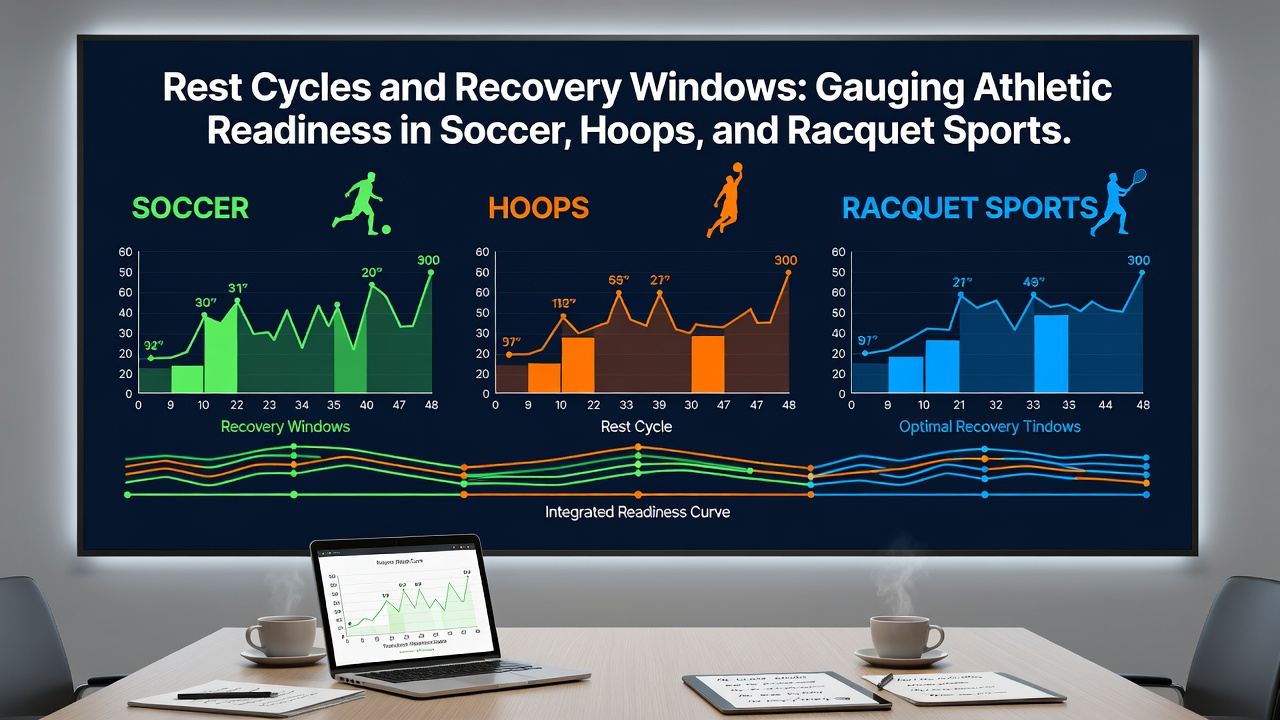
Coaches and medical staffs combine subjective wellness questionnaires with objective tools including morning heart rate variability readings and jump height assessments to gauge daily readiness. Figures from sports science programs reveal that athletes who maintain consistent sleep timing across travel days preserve higher readiness scores than those experiencing circadian disruption, while blood biomarker panels tracking creatine kinase levels provide additional context for muscle damage status in all three sports. August 2026 schedules will again test these systems as overlapping international windows and domestic leagues create dense fixture lists that reward precise recovery planning.
Teams integrate wearable technology that logs overnight recovery scores and flags deviations from individual baselines, allowing staff to modify training loads before visible performance drops occur. Data collected across soccer academies, basketball programs, and professional tennis tours shows that individualized thresholds outperform generic rest prescriptions because genetic factors, age, and prior injury history alter how quickly each athlete restores homeostasis after exertion.
Practical Applications in Training Environments
Strength and conditioning departments design microcycles that alternate high-load days with deliberate recovery emphasis, incorporating nutrition timing and hydration protocols alongside sleep hygiene education. Evidence from university athletic departments demonstrates that athletes who receive structured guidance on these elements report fewer missed training sessions and sustain performance across multi-month campaigns. In racquet sports, where individual schedules vary widely, coaches often schedule mandatory downtime blocks between tournaments to prevent cumulative fatigue from eroding serve accuracy and court coverage speed.
Conclusion
Rest cycles and recovery windows continue to shape outcomes in soccer, basketball, and racquet sports as organizations refine protocols around measurable physiological markers. Ongoing data collection from wearable devices and standardized testing batteries supplies teams with actionable insights that support consistent athletic output across compressed calendars, while August 2026 fixtures will provide further real-world validation of these approaches.