How Altitude Variations Alter Scoring Trends in High-Level Matches Across Different Sporting Codes and Their Implications for Wager Construction
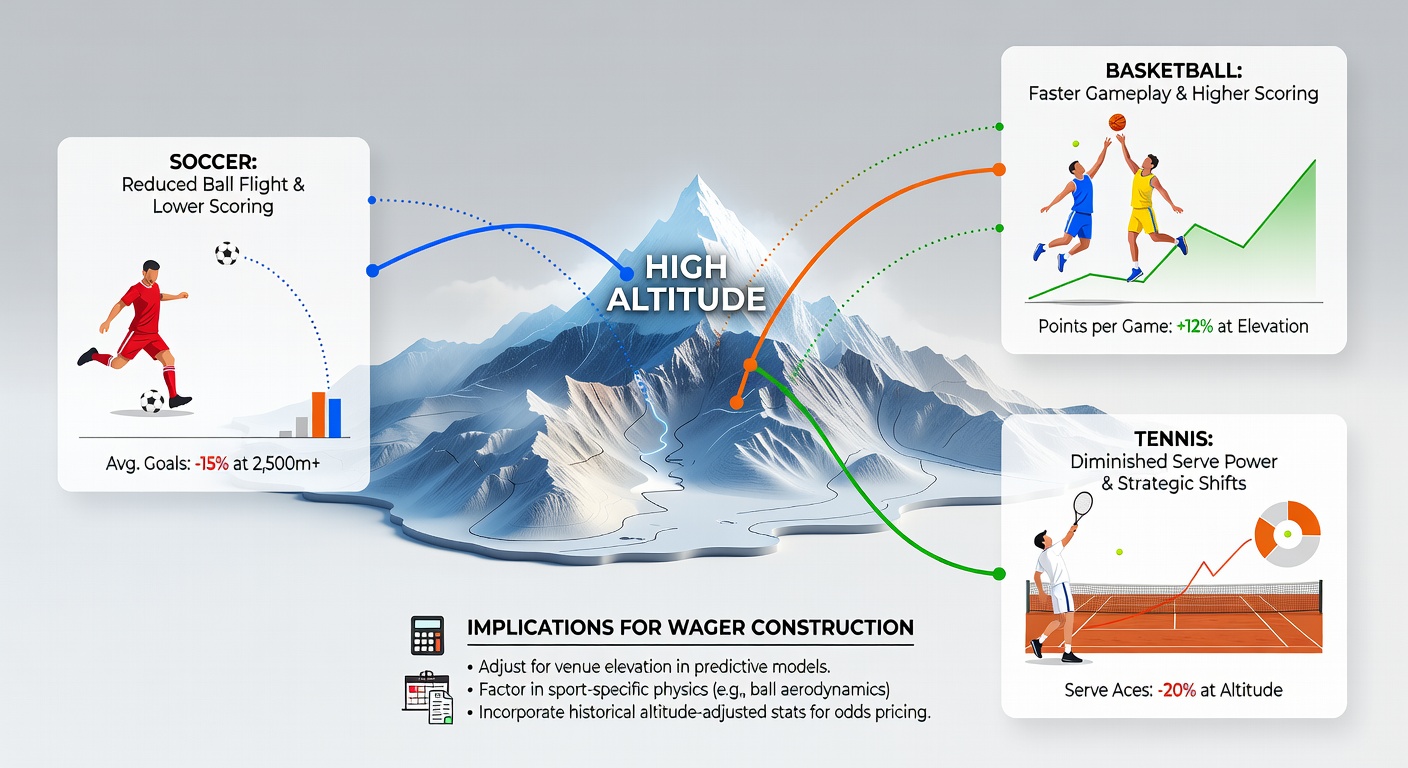
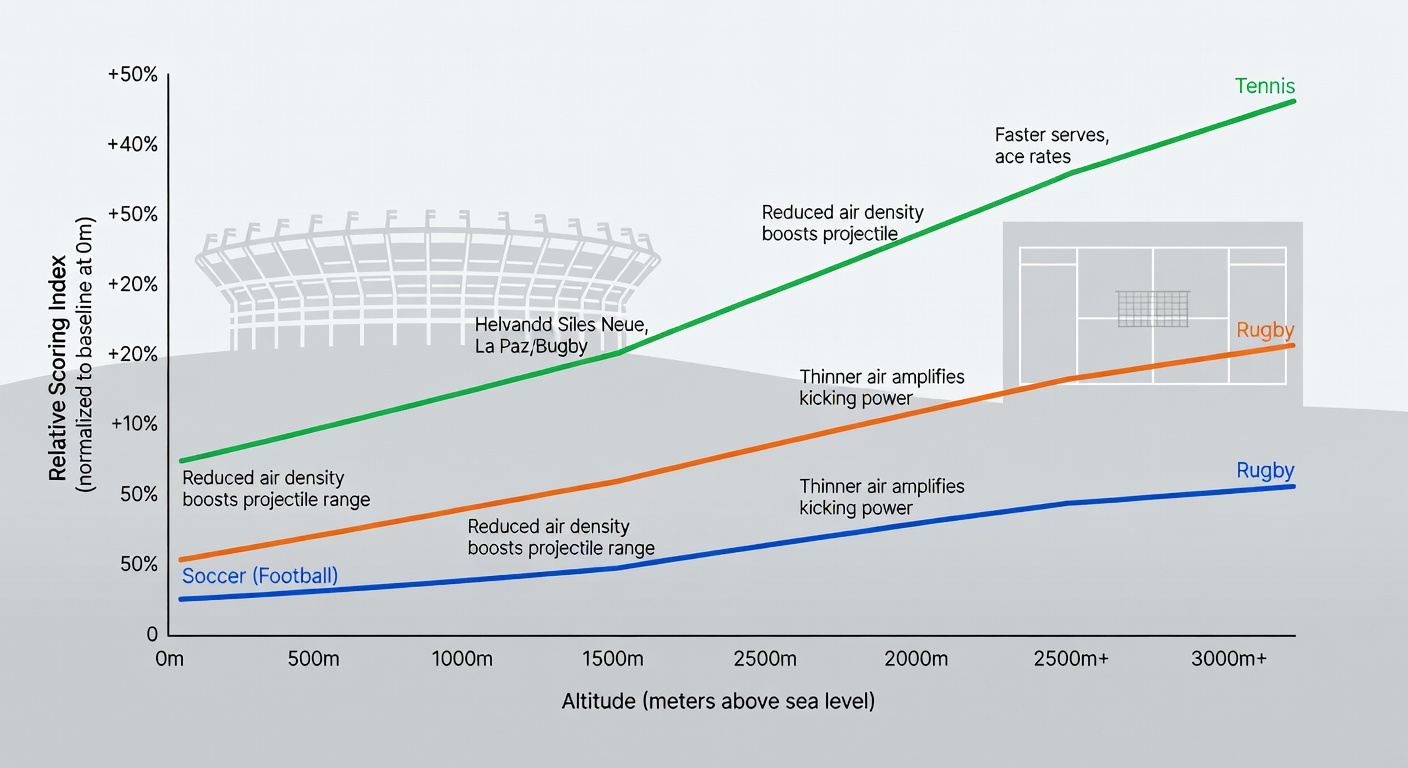
Observers note that elevation changes create measurable shifts in scoring patterns because lower air density reduces drag on projectiles while simultaneously limiting oxygen availability for athletes. Research from sports physiology labs shows that at elevations above 1500 meters balls travel farther and faster in many codes, yet players cover less ground over time due to faster onset of fatigue. These combined factors reshape totals in football, basketball, tennis and rugby, prompting adjustments in wager models that focus on over-under lines and player performance props. Data collected across multiple seasons reveals consistent patterns at venues such as Estadio Hernando Siles in La Paz and the stadiums around Denver. In soccer matches played above 2500 meters, average goals per game rise by roughly 0.4 compared with sea-level fixtures because long-range shots dip less and crosses hold their trajectory longer. Yet the same matches often see fewer sustained attacks after the 60-minute mark since visiting teams struggle to maintain high-intensity pressing.Football and the Thin-Air Advantage
Figures from South American qualifiers and domestic leagues indicate that home sides at altitude post higher shot volumes from distance, while visiting defenses concede more set-piece opportunities as concentration wanes. Analysts tracking Copa Libertadores fixtures between 2018 and 2025 recorded a 12 percent increase in goals from outside the box at Bolivian venues. Bettors constructing accumulators therefore examine historical totals rather than relying solely on recent form, because the environmental variable overrides many tactical trends.
Basketball and Reduced Arc Accuracy
In the NBA and international tournaments staged at altitude, three-point percentages climb modestly while free-throw consistency drops because of altered proprioception under lower oxygen. Studies compiled by the University of Colorado’s altitude research group demonstrate that visiting teams average 1.8 fewer points in the fourth quarter at Denver’s arena than at comparable sea-level sites. This late-game dip influences second-half totals and live betting lines, particularly when squads with deep benches face opponents unaccustomed to the conditions.
Tennis and Serve-Dominant Patterns
ATP and WTA events on the Andean swing or at high-desert North American stops show elevated ace rates and fewer breaks of serve. The ball bounces higher and moves through the strike zone with greater speed, rewarding big servers while compressing rally lengths. Match data from the 2025 season onward indicates that tie-break frequency rises by 9 percent at these elevations, which alters set-total markets and creates value in player-specific over-ace props.
Rugby and Aerobic Fatigue Thresholds
Super Rugby and international tests hosted in Johannesburg and other highland locations reveal that teams with superior bench depth maintain scoring output deeper into matches. High tackles and lineout accuracy decline after the 50-minute mark for squads arriving from coastal bases, yet forward carries near the try line sometimes increase because the ball travels farther when kicked. Wagering syndicates monitoring these fixtures therefore weight late-game try markets differently than they would for sea-level encounters.
Wager Construction Adjustments
Bookmakers incorporate altitude coefficients into their models, yet residual inefficiencies appear when multiple variables converge. Bettors who layer historical scoring averages with travel-distance metrics and recent acclimatization data often identify edges in over totals for home sides and under totals for visiting offenses after halftime. In May 2026 several South American and North American venues will host high-stakes fixtures at elevation, providing fresh datasets that sharpen these calculations.
Cross-sport accumulators gain complexity because the same physical principles apply across codes but manifest differently. A football match at altitude may favor over 2.5 goals while a basketball game at the same site pushes toward the under on total points, so constructors balance correlated and anti-correlated legs rather than stacking similar directional bets.
Conclusion
Altitude remains a quantifiable environmental input that alters projectile dynamics and physiological output across sporting codes. Those constructing wagers integrate venue-specific historical data, player acclimatization profiles and quarter-by-quarter or set-by-set splits to refine totals and prop selections. As fixtures continue at elevated sites through 2026, updated performance metrics will further refine these approaches for objective, evidence-led betting frameworks.