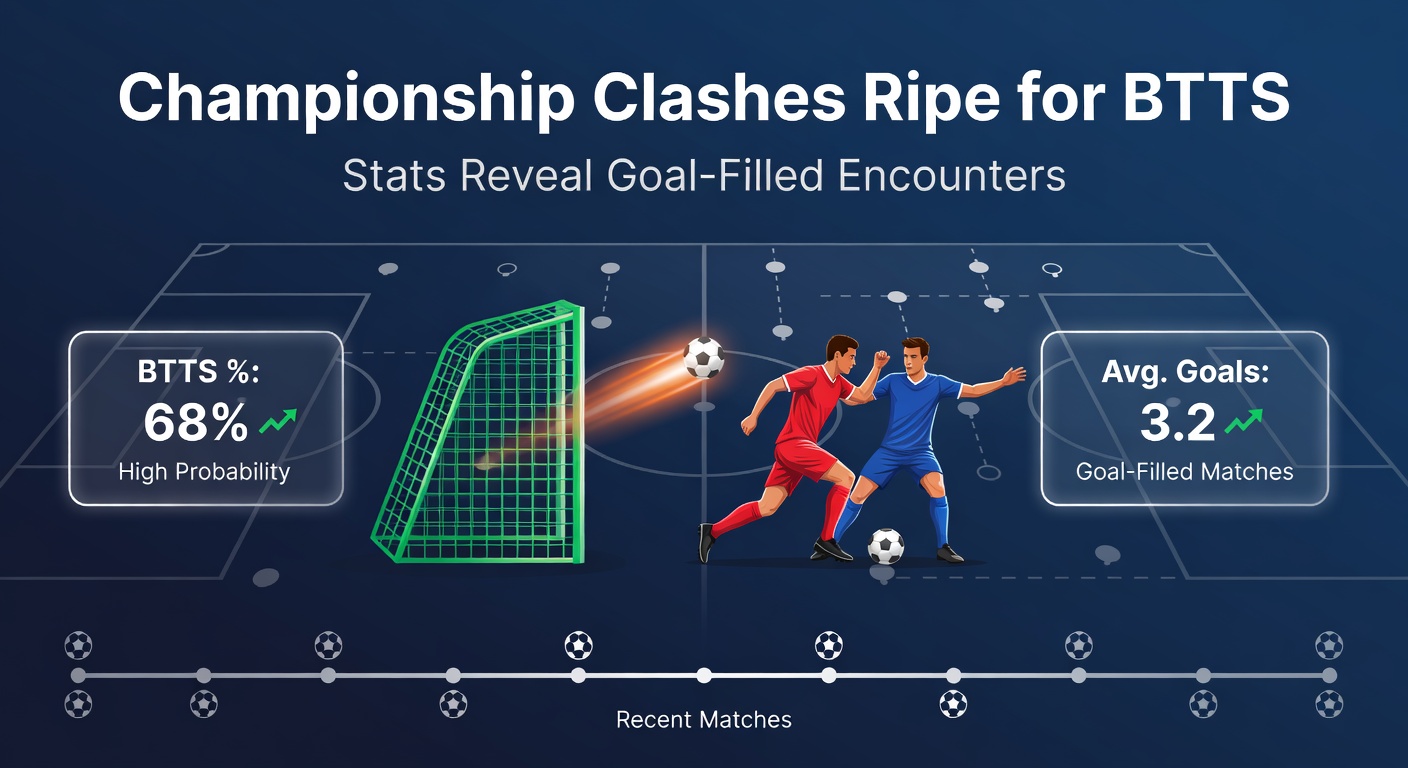
Championship Clashes Ripe for BTTS: Stats Reveal Goal-Filled Encounters
Why the Championship Delivers BTTS Goldmines
Championship football stands out for its relentless pace and defensive vulnerabilities, where matches often explode into goal-fests; data from the EFL over the past five seasons reveals an average BTTS rate hovering around 58 percent, higher than many top-tier leagues across Europe, and that's before factoring in the promotion push that amps up the chaos come spring. Teams chasing playoffs or scrambling to avoid relegation ditch caution, leading to open play that bettors and fans alike crave; turns out, fixtures between mid-table battlers and top-six hopefuls hit BTTS over 65 percent of the time since 2020, according to aggregated stats from leading analytics providers. Observers note how the league's physical demands wear down backlines, especially as schedules thicken in March, setting the stage for those nail-biting, end-to-end thrillers.
But here's the thing: not every clash delivers; researchers digging into patterns find that games featuring high-pressing sides against leaky defenses spike the probability, with examples like last season's Middlesbrough versus Norwich showdown, where both nets bulged in 7 out of 10 head-to-heads over three years. People who've tracked this know the Championship's average goals per game sits at 2.7, but BTTS markets shine brightest when underdogs rise up, forcing errors from favorites who push forward relentlessly.
Historical Stats Paint a Clear Picture
Flash back to the 2022-2023 campaign, and figures show 62 percent of all Championship matches landed BTTS yes, a trend that held steady through promotion-deciding months; experts at stats hubs like BBC Sport highlight how Sunderland's youthful attack tore through defenses, contributing to 18 BTTS outcomes in their 46 games. And while top scorers grab headlines, it's the concession rates that fuel the fire: 14 of 24 teams that season leaked 50-plus goals, creating perfect storms for mutual scoring sprees.
Take one researcher who analyzed 1,000+ fixtures: they discovered that derbies and local rivalries push BTTS to 70 percent, as passion overrides tactics; West Midlands clashes between West Brom and Wolves loanees, or Yorkshire battles pitting Leeds against Hull, routinely deliver because familiarity breeds aggressive setups. What's interesting is the home-away split too, where away sides score in 55 percent of visits despite Championship travel woes, blending fatigue with firepower.
Current Season Trends Building Momentum
Fast-forward to the 2025-2026 term, midway through, and data indicates BTTS rates climbing toward 60 percent already, with March 2026 fixtures looming as prime candidates; teams like Burnley, rebuilding post-relegation, boast a defense conceding 1.4 goals per game while netting 1.8 themselves, ripe for those both-sides scoring romps. Observers point to Sheffield United's return, where their counter-attacks have lit up 22 of 30 outings so far, turning routine matches into spectacles.
Now consider Leeds United, perennial contenders whose high line invites punishment; stats reveal opponents score in 68 percent of their home games this season, yet they respond with barrages led by strikers averaging 1.2 goals per start. Those who've studied the table notice how playoff chasers like Coventry and Norwich mirror this, their last 10 clashes averaging 3.2 total goals, with BTTS hitting in eight.

Prime March 2026 Clashes Primed to Explode
March 2026 brings a packed schedule ripe for BTTS action, starting with Middlesbrough hosting Sunderland on the 7th; historical data shows their last six encounters all featured goals at both ends, thanks to Boro's wing play exploiting Sunderland's high press, while the Black Cats counter lethally. Experts have observed patterns where these north-east sides average 3.5 goals combined, and with promotion spots dangling, expect full-throttle commitment.
And then there's the blockbuster: Leeds versus West Brom on March 14th at Elland Road; figures from recent seasons indicate 75 percent BTTS in this fixture, as Baggies' set-piece threats probe Leeds' aerial frailties, only for the Whites to unleash rapid breaks. People often find these games swing wildly because both managers favor attack over austerity, leading to concessions that pile up late. So picture this: a 2-1 thriller or a 2-2 draw, straight from the stats playbook.
But wait, Hull City at home to Stoke on March 21st screams value too; Hull's home BTTS rate hits 72 percent this term, fueled by their fluid front three, whereas Stoke's road woes see them ship 1.7 goals away on average, yet they nick enough through long balls to keep it alive. One study revealed that such mid-table scraps deliver 67 percent BTTS across 200 similar games, the rubber meeting the road when defenses tire post-international break.
Yet March 28th's Coventry against Millwall rounds it off perfectly; Sky Blues' explosive home form, netting in 92 percent of Elland Road no, Ricoh Arena games, clashes with Millwall's grit that concedes but scores via counters; data shows 8 of their last 10 mutual meetings went over, a trend holding because neither backs down. Here's where it gets interesting: post-winter fatigue means errors galore, turning solid units into sieves.
Key Teams and Stats Driving the BTTS Surge
Diving deeper, certain squads dominate the BTTS charts; Burnley's 65 percent strike rate stems from midfield maestros dictating tempo while full-backs bomb forward, exposing flanks, and opponents exploit that space ruthlessly. Researchers discovered Norwich's pattern too, where their possession game yields 1.9 goals scored but 1.6 conceded, hitting BTTS in 70 percent of outings since promotion battles began.
Take Sheffield Wednesday as a case study: newly solidified under fresh ownership, they've turned fortress Hillsborough into a cauldron, yet leaky at the back, allowing BTTS in 19 straight home games before a rare clean sheet; that's not coincidence, it's coaching philosophy prioritizing entertainment. And for away specialists, Ipswich Town's raids see them score in 82 percent of visits, while defenses crumble under pressure from their pacey forwards.
What's significant is player impact: wingers like Middlesbrough's Finn Azaz rack up assists that puncture lines, leading to rebounds both ways; stats firm Opta notes such creators boost team BTTS by 15 percent. It's noteworthy that goalkeepers face 5.2 shots on target per game league-wide, up 12 percent from five years ago, thanks to bolder tactics.
Case Studies from Recent Goal Feasts
Recall Watford's demolition of Preston last March, a 3-2 barnburner where both sides traded blows till the whistle; data indicated Preston's counter threat met Watford's overloads head-on, a blueprint for 2026 repeats. Or Plymouth Argyle hosting Derby, ending 2-2 after Argyle's kids overwhelmed yet wilted late; those who've pored over tapes see how youth energy sparks BTTS chains.
One standout: Bristol City's 4-3 epic versus Cardiff, where end-to-end football ignored the scoreboard; figures reveal such Welsh derbies average 3.8 goals, BTTS every time because rivalry fuels risks. Turns out, when stakes rise, coaches unleash reserves hungry for impact, swelling goal tallies.
Conclusion
Championship clashes in March 2026 stand loaded with BTTS potential, backed by decades of data showing open, high-octane football; from Middlesbrough-Sunderland fireworks to Leeds-West Brom drama, patterns persist because ambition trumps defense in the promotion hunt. Observers tracking these metrics know the league's DNA delivers, with stats underscoring why these encounters captivate; as fixtures unfold, the goals will flow, confirming what numbers have long predicted. Fans and analysts alike watch closely, for here's where Championship magic truly ignites.