Altitude's Influence on Athletic Performance Metrics in Elevated Soccer Fixtures and Steeplechase Events
High-altitude environments alter oxygen availability, which directly shapes how athletes perform during soccer matches played above 2,000 meters and during steeplechase races contested at similar elevations. Data from multiple studies indicate that partial pressure of oxygen drops, forcing the body to adjust respiration rates, heart output, and energy production pathways within minutes of arrival. Researchers tracking these changes note consistent patterns across endurance-based sports where sustained effort meets reduced air density.
Physiological Responses at Elevation
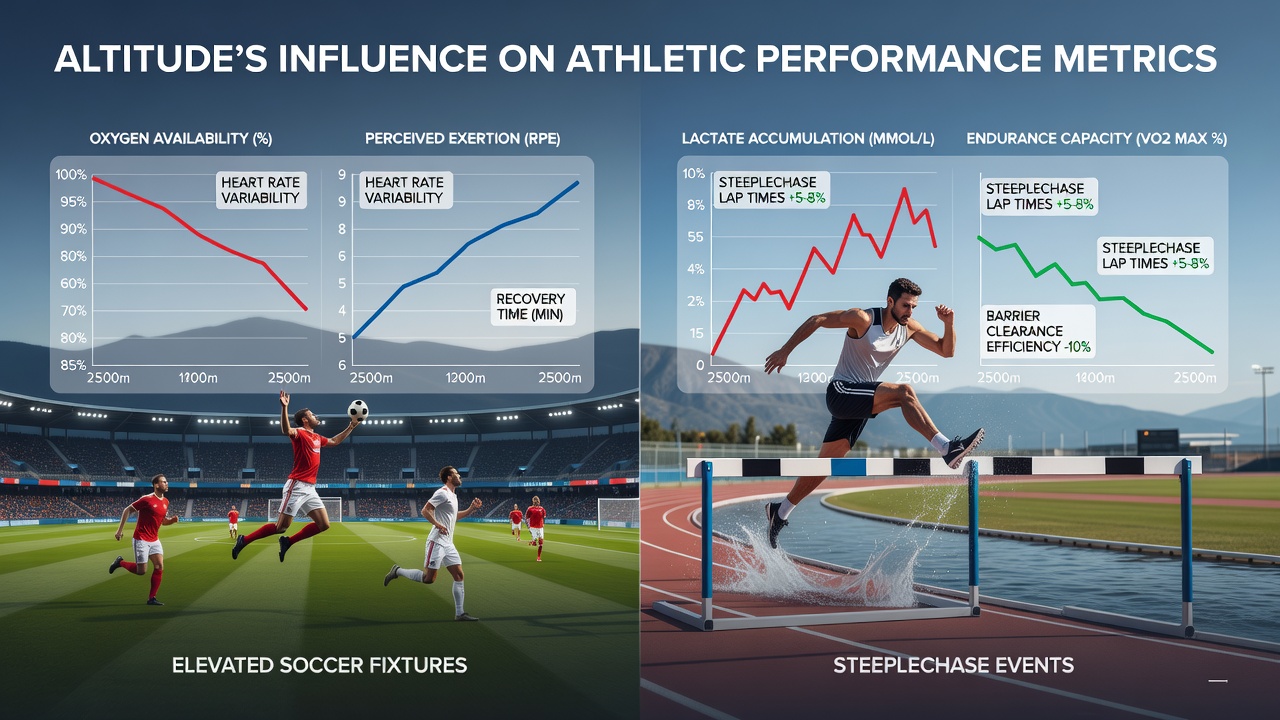
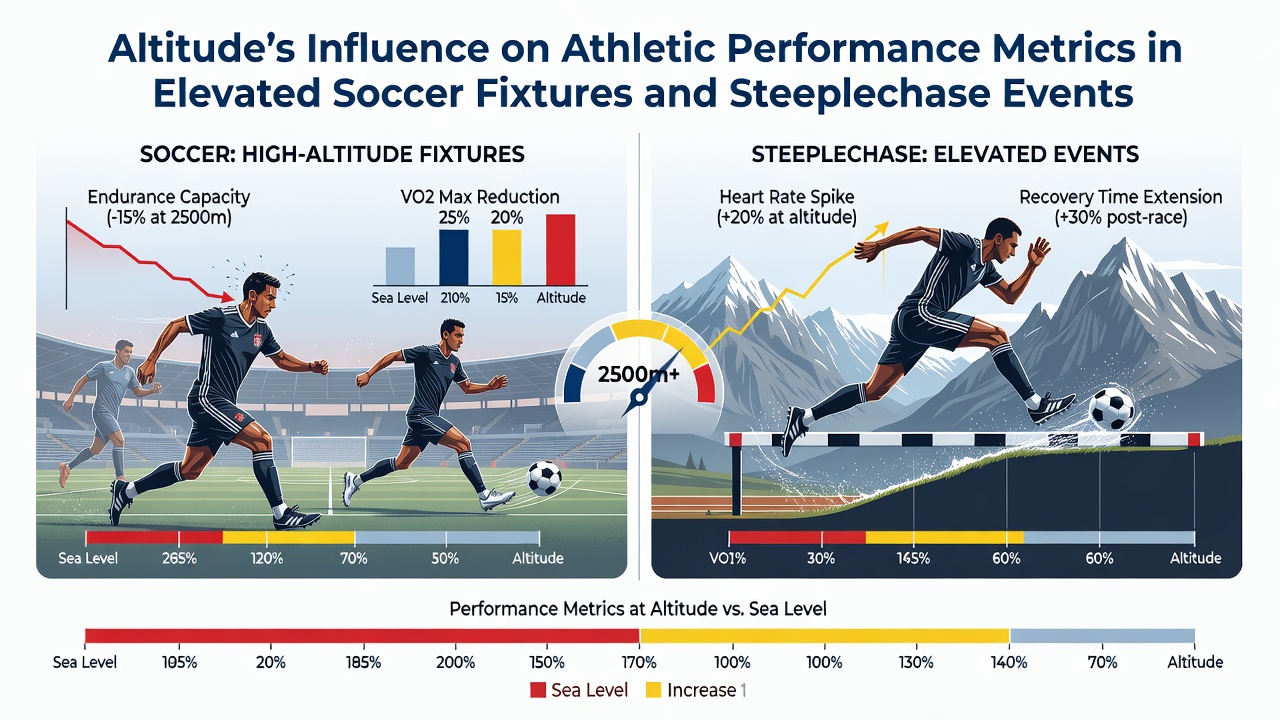
Acute exposure triggers increased breathing frequency and elevated heart rate as the cardiovascular system works harder to deliver oxygen to working muscles. Studies conducted at venues above 2,500 meters reveal that VO2 max can decline by 10 to 15 percent within the first 24 hours, while blood lactate accumulation rises earlier during submaximal efforts. Observers monitoring soccer players in Bolivia and steeplechase athletes training in the Ethiopian highlands report that these shifts appear within hours and stabilize only after several days of acclimatization. The reality is that anaerobic contributions become more prominent because aerobic metabolism faces immediate constraints from lower oxygen saturation levels.
Soccer Performance at High Altitude
Elevated soccer fixtures, such as those hosted in La Paz at approximately 3,600 meters, produce measurable differences in match statistics. Total distance covered by players drops by roughly 5 to 8 percent compared with sea-level equivalents, according to GPS tracking data collected during CONMEBOL competitions. Sprint frequency remains relatively stable in the opening 30 minutes yet declines sharply in later stages, while pass completion rates show minor reductions linked to altered ball trajectory in thinner air. One analysis of matches played between 2018 and 2025 found visiting teams from lower elevations conceded more goals after the 60-minute mark, a pattern tied to faster fatigue onset rather than tactical adjustments alone.
Steeplechase Metrics and Altitude Effects
Steeplechase events held at altitude present distinct challenges because the 3,000-meter distance combines continuous running with repeated barrier clearance and water jumps. Performance records indicate that times lengthen by 3 to 6 percent at 2,000 meters and beyond, with the water jump section showing the largest relative slowdown due to increased energetic cost. Heart-rate monitors worn during training camps in Kenya's Rift Valley demonstrate that athletes maintain higher average rates throughout the race while peak speeds in the final kilometer decrease. Those who have examined race splits note that the middle 1,000 meters often becomes the critical segment where accumulated oxygen debt determines final placement.
Acclimatization Protocols and Data Trends
Teams and federations implement staged arrival schedules to mitigate performance decrements. Athletes arriving seven to ten days before competition show smaller drops in endurance metrics than those arriving within 48 hours, according to monitoring programs run by the Australian Institute of Sport and several European Olympic committees. Blood-oxygen saturation readings improve progressively, yet full restoration of sea-level capacity rarely occurs below 2,500 meters. What's interesting is that technical elements, such as shooting accuracy in soccer or hurdle rhythm in steeplechase, exhibit less degradation because they rely more on neuromuscular coordination than on maximal oxygen uptake.
August 2026 schedules include several high-profile fixtures and meets at altitude venues across South America and East Africa, providing fresh datasets for performance analysts. Tracking technology now captures granular variables including stride length variability and respiratory exchange ratios, allowing researchers to quantify how altitude interacts with heat, humidity, and match intensity. Figures from recent multi-year studies reveal that repeated exposure builds partial tolerance, though individual responses vary according to genetic factors and prior training history.
Comparative Analysis Across Disciplines
Direct comparisons between soccer and steeplechase highlight shared aerobic limitations alongside sport-specific demands. Soccer involves intermittent high-intensity bursts separated by recovery periods, whereas steeplechase requires near-continuous effort with periodic technical interruptions. Both activities experience earlier onset of perceived exertion at altitude, yet soccer players can partially offset fatigue through tactical substitutions while steeplechase competitors must manage pacing without external assistance. Evidence compiled by the International Olympic Committee medical commission underscores that hydration strategies and warm-up modifications produce measurable benefits in both settings, particularly when ambient temperatures rise alongside elevation.
Conclusion
Altitude modifies core performance metrics through reduced oxygen availability, prompting measurable adjustments in distance covered, speed maintenance, and recovery capacity during elevated soccer fixtures and steeplechase events. Ongoing data collection from competitions scheduled through 2026 continues to refine understanding of these interactions, supporting evidence-based preparation approaches used by federations worldwide.